SCYCLE supports six Southern African countries in advancing circular electronics
13 minutes ago ac1805 Comments Off on SCYCLE supports six Southern African countries in advancing circular electronics
UNITAR’s Sustainable Cycles (SCYCLE) Programme is providing technical support to a new regional initiative helping Botswana, Eswatini, Lesotho, Mozambique, Namibia and South Africa move towards circular electronics and environmentally sound e-waste management.
Launching with an inception workshop in Johannesburg from 26 to 28 October 2026, the project brings together governments, international organisations and industry partners to address electronics across their lifecycle: from product design and use to repair, refurbishment, collection and recycling.
For SCYCLE, the initiative offers an opportunity to connect research and data with policy development and practical action. Reliable evidence on electronics consumption, waste generation and resource recovery helps countries identify priorities, design effective interventions and track progress.
Connecting evidence with action
The scale of the challenge is substantial. Country estimates from the Global E-waste Monitor 2024 indicate that the six participating countries generated approximately 596,000 tonnes of e-waste in 2022. Globally, only 22.3 per cent of e-waste generated that year was documented as formally collected and recycled.
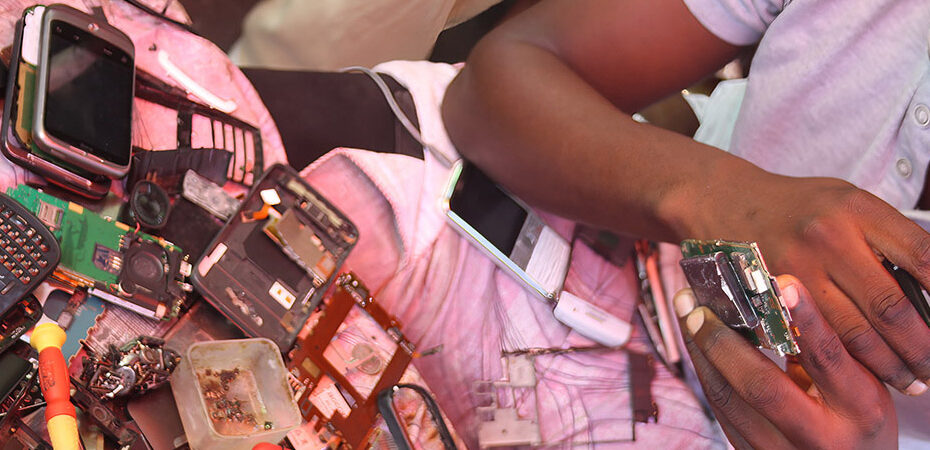
Addressing this challenge requires action well before products become waste. The project will support stronger policies and institutional capacities, sustainable product design and circular business models. It will also help expand repair and refurbishment networks and improve collection and recycling systems.
SCYCLE’s technical support will contribute to this regional effort, bringing its expertise in sustainable electronics and e-waste to a partnership designed to translate circular economy ambitions into national action.
Building a regional response
Cooperation among the six countries creates opportunities to share expertise, learn from different national approaches and develop solutions that can be sustained across the region. The Johannesburg workshop will help partners agree on implementation arrangements, discuss national priorities and establish a shared direction for the work ahead.
The project aims to benefit 100,000 people, half of them women. Its environmental targets include mitigating approximately 192,000 tonnes of carbon dioxide emissions, safely removing or disposing of 476 tonnes of persistent organic pollutants, and reducing mercury in the electronics value chain by 28 kilograms. These are intended outcomes to be pursued through project implementation.
A partnership for circular electronics
The initiative receives US$10 million in funding from the Global Environment Facility (GEF), alongside US$77 million in co-financing from participating countries and project partners. It forms part of the Global Electronics Management (GEM) Programme, led globally by the United Nations Industrial Development Organization (UNIDO) in partnership with the United Nations Environment Programme (UNEP) and other international partners.
The regional project is executed by the Africa Institute for Environmentally Sound Management of Hazardous and Other Wastes, with technical support from UNITAR-SCYCLE.
Through this partnership, SCYCLE is supporting a shared goal: keeping electronics and their materials in productive use for longer, while protecting people and the environment from hazardous waste.
Read the original UNEP announcement.